India 2017

Day 12: January 30

Aurangabad (Ellora Caves)

India 2017

Itinerary

And so today’s topic is the Ellora Caves. In the guidebook, this attraction is listed among the top 20 best in all of India. We decided to get there on our own by bus. We made it to the bus station, found out from which platform the bus to Ellora departs, and started waiting. The bus arrived about 15 minutes later. Besides us, we didn’t notice any tourists at the station — probably everyone gets there by taxi…

A crowd of Indians instantly blocked the bus entrance door. Everyone was pushing, trying to squeeze in and grab seats. We were standing at the very end of this crowd, and there was absolutely no hope that we would get a seat. In the end, we somehow shoved ourselves onto the bus; there were a lot of people. The seats are designed for two, but the Indian we were looming over moved his skinny daughter closer to the window and offered me a seat with them as a third. So I rode almost comfortably — sitting down.

Ellora is only 30 km away, but we traveled for almost an hour. As I’ve already said more than once, traffic here is unhurried.

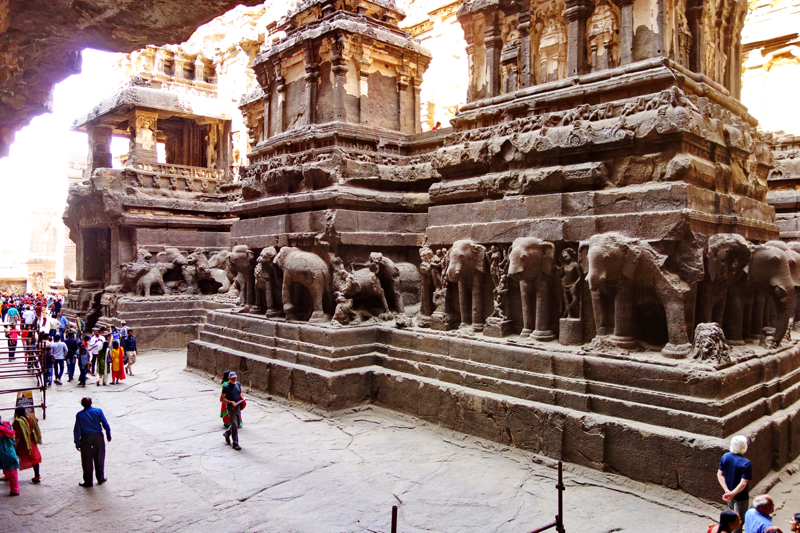
Admission to the caves costs no less than 8 dollars for foreigners (for comparison, Indians pay only 0.5 dollars!). We started with the most beautiful and majestic temple, Kailasa, located right opposite the entrance. This temple was carved out of the rock for 150 years, and 7,000 workers labored on it. It is truly astonishing; I have never seen anything like it anywhere. I can’t even imagine how in the 8th century, using only a simple hammer and chisel, such beauty could have been created. This temple is considered the largest monolithic structure in the world.

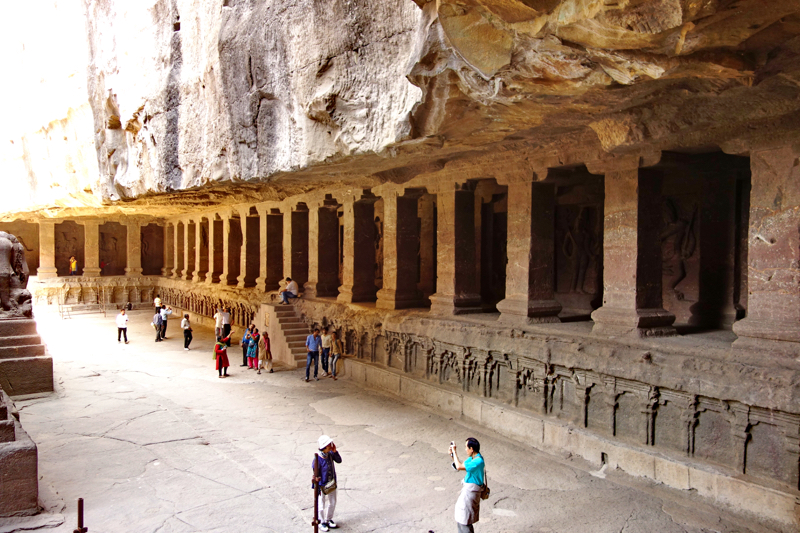
Gallery in the Kailasa Temple

Gallery in the Kailasa Temple

In the center stands the temple; it was part of the rock, and in order to create such a wonder, the craftsmen seemed to have freed the temple from the rock. Around the temple, a gallery with columns has been carved out. Along its entire length, the wall is decorated with carved images.

The temple is also generously adorned with statues, paintings, and ornaments. It used to be colorful, and traces of paint still remain in places. That is, not only did the craftsmen carve the figures, they also painted them! Looking at all this, you realize that 150 years of labor for such a miracle is actually quite fast. There are so many small details here! In the temple, even the ceiling is decorated with three-dimensional statues and carved columns!

Outside, the temple is decorated around the perimeter with figurines of various sizes, mostly elephants

Outside, the temple is decorated around the perimeter with figurines of various sizes, mostly elephants

I can’t wrap my head around how they made something like this; they must have had to design, draw, and calculate everything somehow. How was this possible in the 8th century?

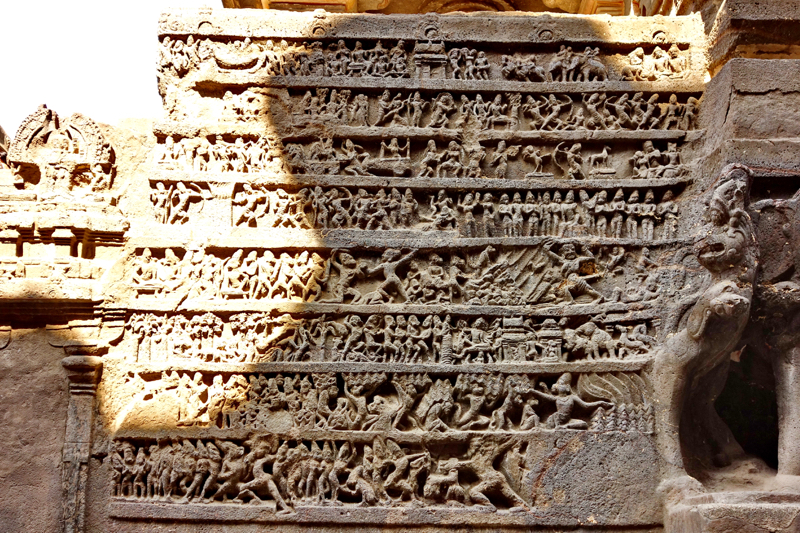
Small carved details from the temple’s outer wall

Small carved details from the temple’s outer wall

Of course, there are a lot of people here. For the first time during the whole trip, we saw quite a lot of white tourists and Chinese people.

But besides this temple, the remaining 30 caves were still waiting for us! In Ellora there are three types of caves - Hindu, Buddhist, and Jain. We continued exploring the Hindu caves. They are all more or less similar to each other, differing in size and the themes of the carvings - depending on which God they were built in honor of.

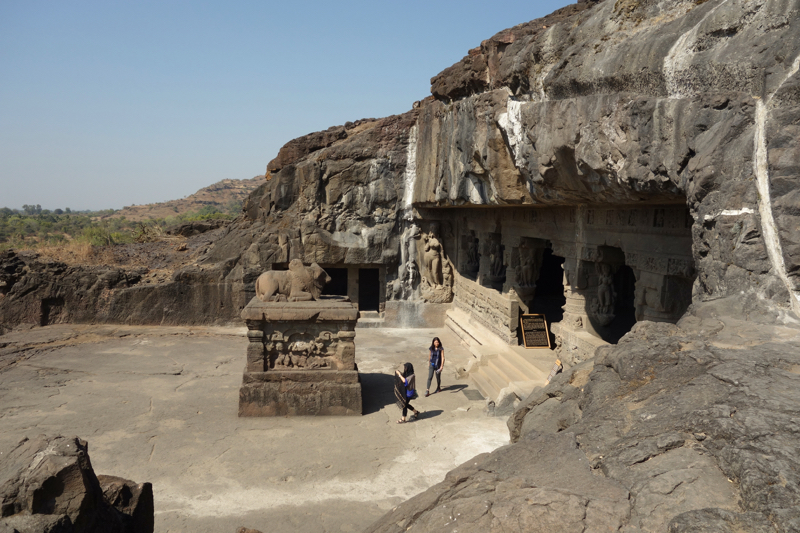
One of the Hindu caves, with a pedestal and a sacred cow in the center

One of the Hindu caves, with a pedestal and a sacred cow in the center

The caves are carved into the rocks, and it is cool inside them. So when it got really hot, we would hide in the caves and rest a little.

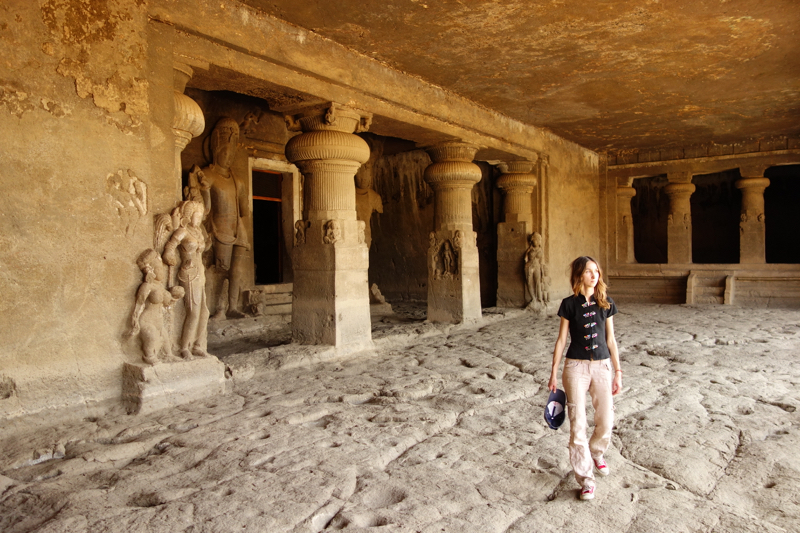
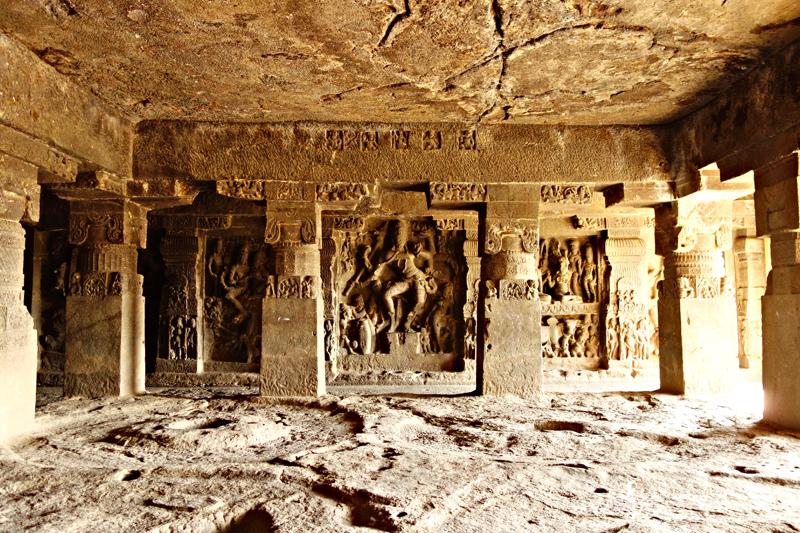
Inside the cave. Almost all of them are adorned with carved columns and statues of the Gods

Inside the cave. Almost all of them are adorned with carved columns and statues of the Gods

Depiction of Gods in Hindu Caves

Depiction of Gods in Hindu Caves

We reached the very end, where the Jain caves were supposed to be, but the entrance there was somehow blocked. So we went back to the Kailasa temple, which stands right in the center of the complex, to the place where the path to the Buddhist caves begins.

The Buddhist caves appealed to us much more. Essentially, they are the same, only instead of Vishnu and Krishna, there is Buddha here. But somehow they seem more elegant, I guess. There are such narrow passages between the caves, steps, balconies.

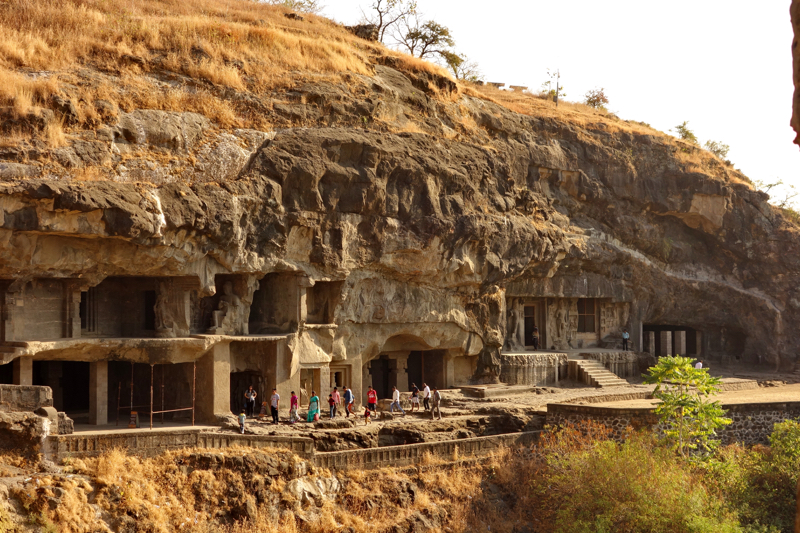
View of the Buddhist caves

View of the Buddhist caves

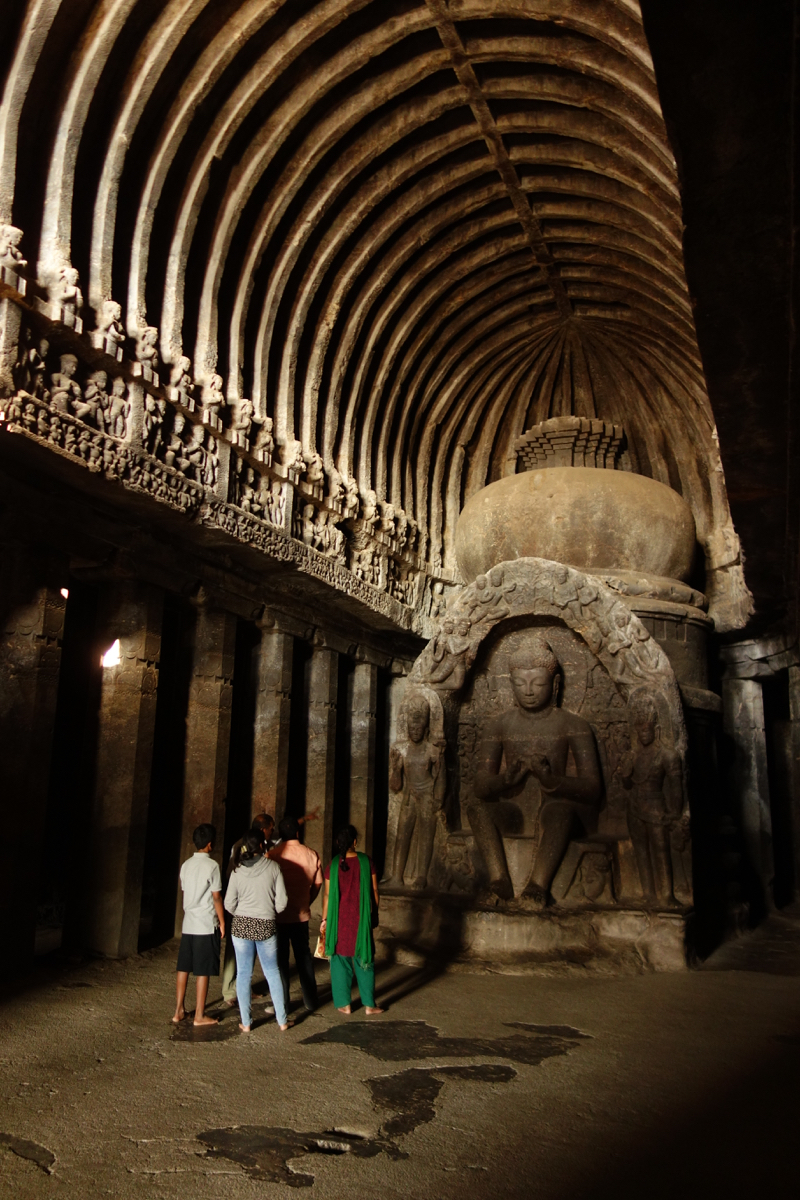
Some caves are beautifully decorated with carvings on the outside. I really liked the unusual cave with a large Buddha statue and a carved ceiling. Dim light filtered inside through a small window, and inside the cave it seemed truly magical.

The most beautiful and majestic of the Buddhist caves, with a large Buddha statue

The most beautiful and majestic of the Buddhist caves, with a large Buddha statue

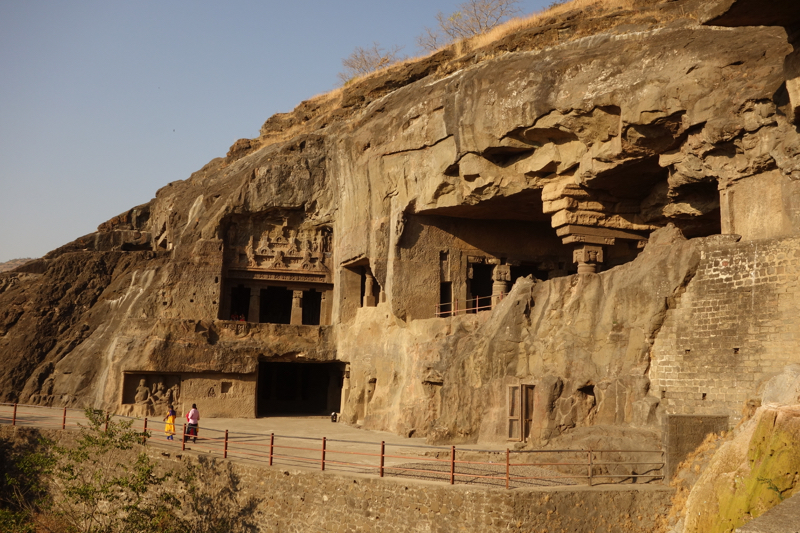
Here you can see that the caves are decorated on the outside

Here you can see that the caves are decorated on the outside

By the end we were very tired; overall we spent 5 hours here!

We went home in an Indian minibus - jeep. Along the way the driver packed the vehicle to the brim, and there were four people sitting in front of us instead of the two passengers allowed! India is a fun country.