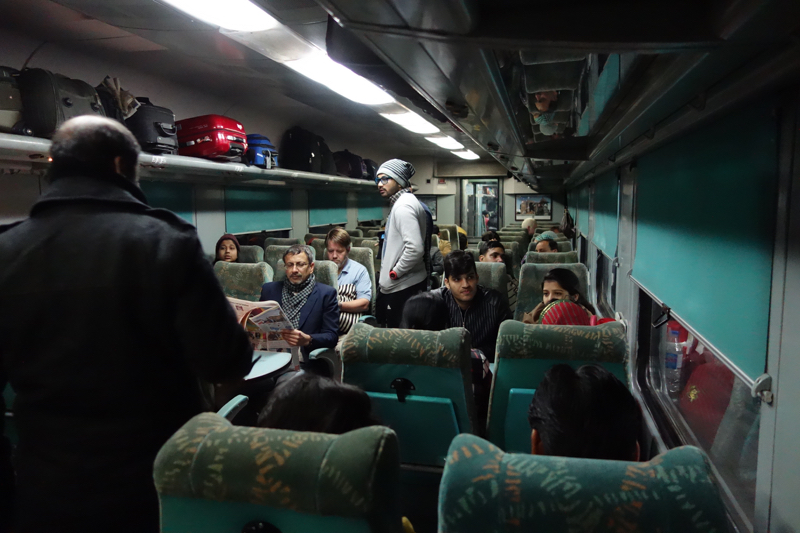
This is a train
On the train we were even fed twice; the food was, of course, so-so, but still. The first time they fed us as soon as the train started moving, bringing each of us a pack of cookies, a small thermos of hot water, and bagged tea. The second time they brought two slices of bread, beautifully wrapped but practically inedible, butter, jam, and fried potato balls. The balls were tasty!
After 6 hours we arrived in the city of Ajmer. As soon as we stepped out of the station building, tuk-tuk drivers kept running up to us one after another and offering their services, but we were determined to find a bus to Pushkar on our own. Soon it became clear that where I expected to find buses, there were none. We asked some passerby how to get to Pushkar by bus. So we kept walking. It was an ordinary noisy Indian city. Along the road they were selling all sorts of things; we bought a bunch of bananas.
We reached a large fork in the road where we asked again about the bus to Pushkar, and the man very confidently said that we should wait for the bus right there, it would come and stop on its own. So that’s what we did — we started waiting. Soon we saw that Indians were gathering somewhat near us, and one man even said that he was also going to Pushkar and that we should follow him. While waiting for the bus, we ate the bananas, which turned out to be tastier than the ones from Kyiv.
Soon the bus arrived, and we even got seats in the royal spot behind the driver. It was very good that we sat down. I thought it would take only about 10 minutes to get there, since Pushkar is only 11 km from Ajmer, but in fact we traveled for quite a long time.
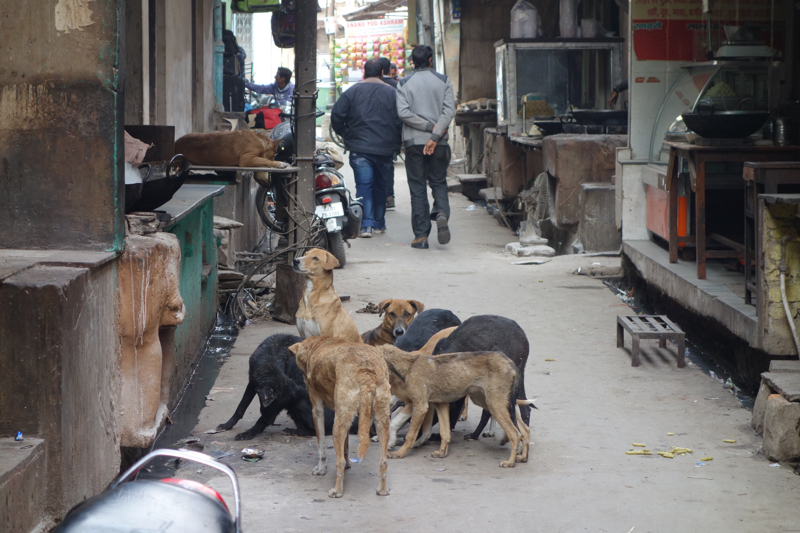
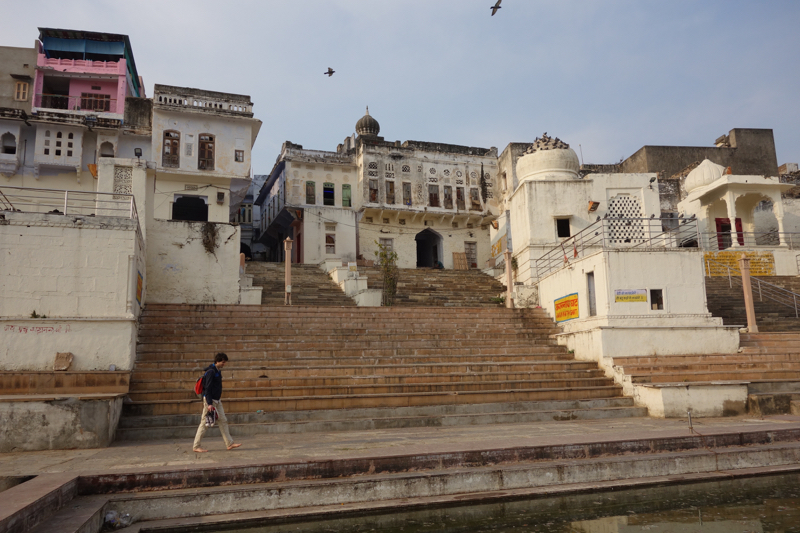
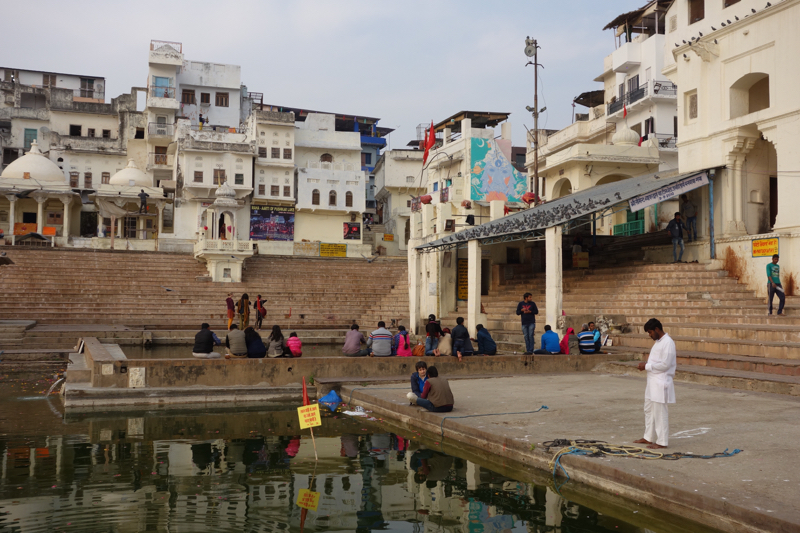
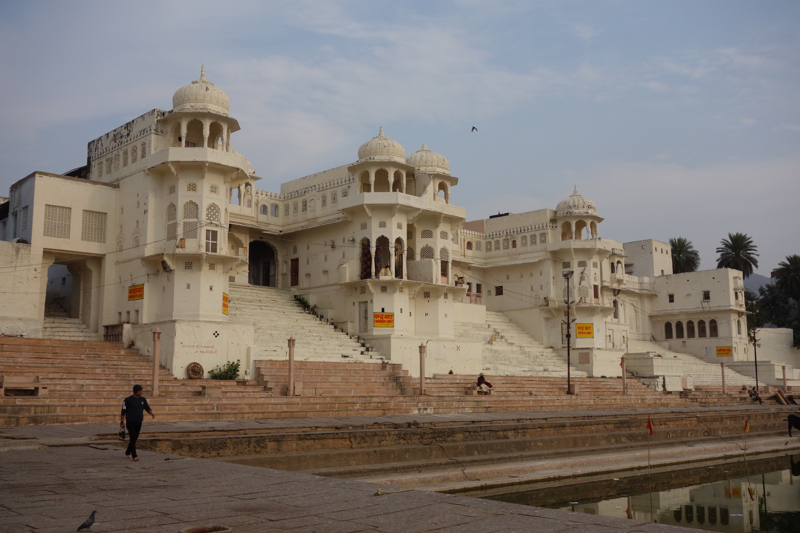
We liked Pushkar right away: a small town with shabby and half-ruined but very beautiful buildings. We walked along the main street, where they sold lots of clothes, souvenirs, and leather goods, toward our hotel. Our hotel was located a little away from the very center of town, but not far.