
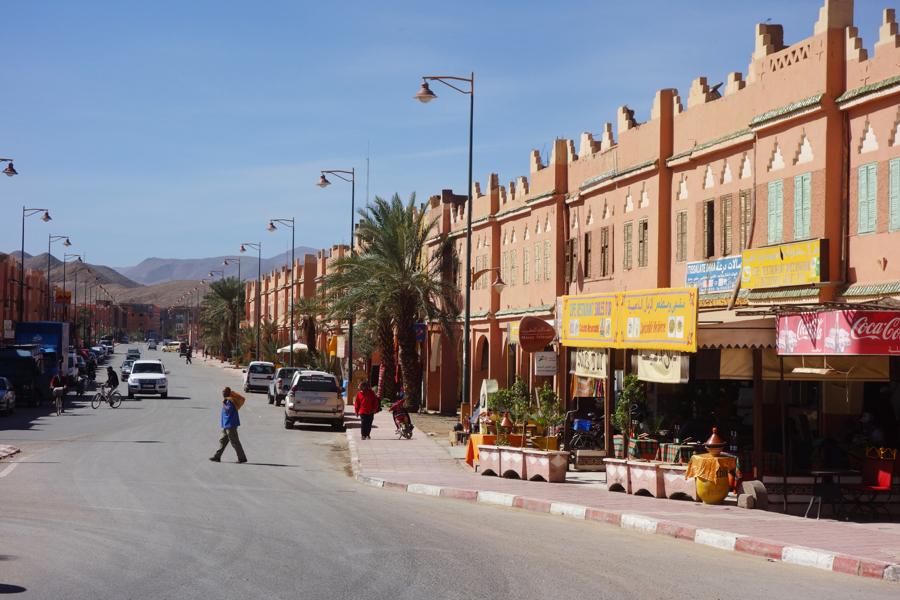
Agdz
The road leads through a date palm grove. We stop to take photos of the date palms. Most of the palms are towering, with bunches of dates hanging out of reach. Volchiy finds a short palm and picks a few ripe dates - delicious!
Ouarzazate - Nkob
Morocco, 2018
On the way to Nkob, we make a short stop in the town of Agdz. We photograph the only street, and turn onto a narrow country road.
Agdz
The road leads through a date palm grove. We stop to take photos of the date palms. Most of the palms are towering, with bunches of dates hanging out of reach. Volchiy finds a short palm and picks a few ripe dates - delicious!
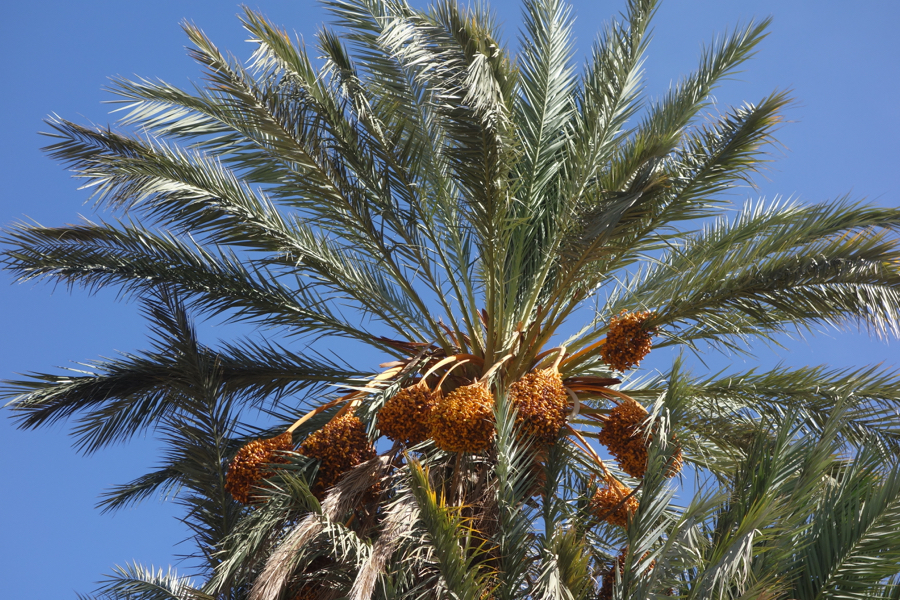
Date palm
A few kilometers from the town of Agdz lies a landmark — the ksar (fortified village) of Tamnougalt, built in the 16th century. Even at the turnoff to the village, a man on a bicycle spotted us and began waving his arms vigorously, showing us the way. “He must be a guide,” I said to Volchy.
The man showed us where to park, and then led us to the main entrance of the village. Entry is paid (although this is not written anywhere; you simply give money to this man on the bike, which is quite normal here in Morocco…). It should be noted, though, that this time the guide turned out to be quite good. He wanted a lot of money for his services as a guide, so we declined. But he still led us through the narrow, winding streets of the ksar. The ksar is built of adobe. The soil here has a distinctive shade, slightly pinkish, and the village turned out the same color.
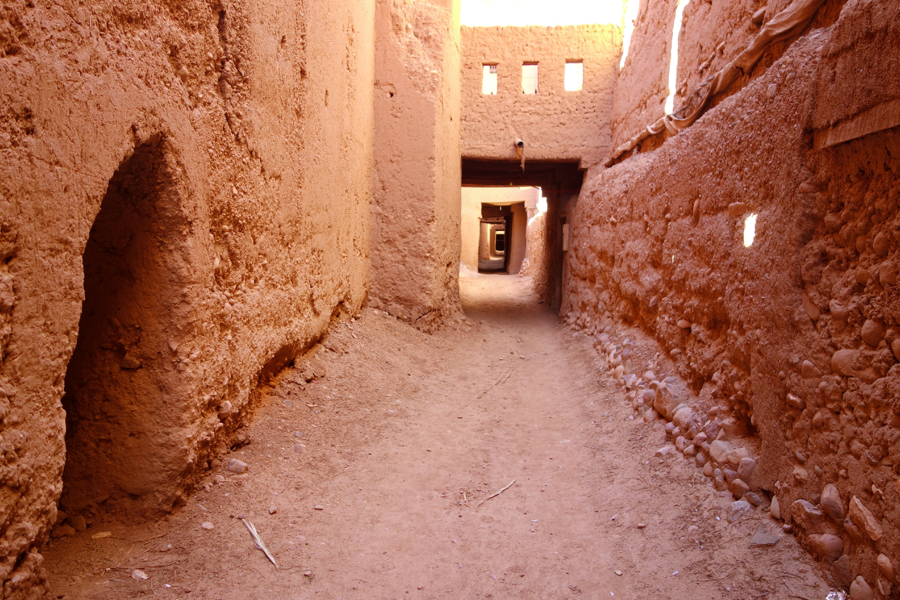
A narrow street in the ksar
In the ksar, it is dim and cool; we decided that it was built this way on purpose — to escape the heat and scorching sun. Along the street are small doors — entrances to homes. In some of these homes, people still live. Water and electricity have even been brought here. We go into one such house, and the guide takes a box of fresh dates from the refrigerator (there is even a refrigerator here!). He says, “Wouldn’t you like to support a local family? They harvested these dates today; they’re the freshest.” We buy the dates; they cost more than at the market. But the guide insists these dates are of the best quality, which I doubt. He says that dates are a very important part of the diet here. People eat them with milk.
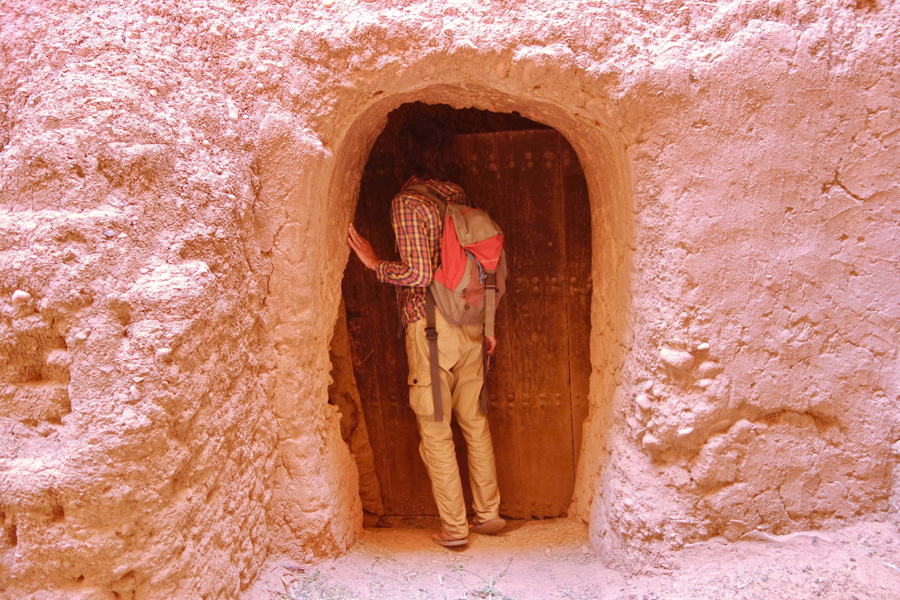
Entrance to the dwelling
A little more, leading us around the village, the guide explains where we should go next, and then disappears.
We make our way along the street inside the ksar. We enter one of the large wooden doors and inside the dwelling find a half-ruined staircase; we climb up it to the roof. From here, we can see the oasis of date palms and the ruined houses of the ksar.
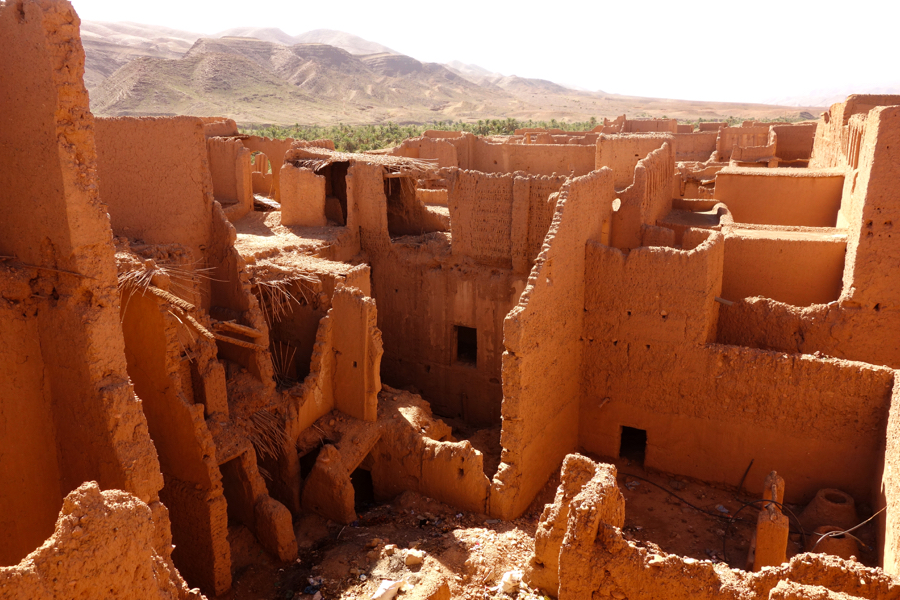
View from the roof of the ruined houses inside the ksar
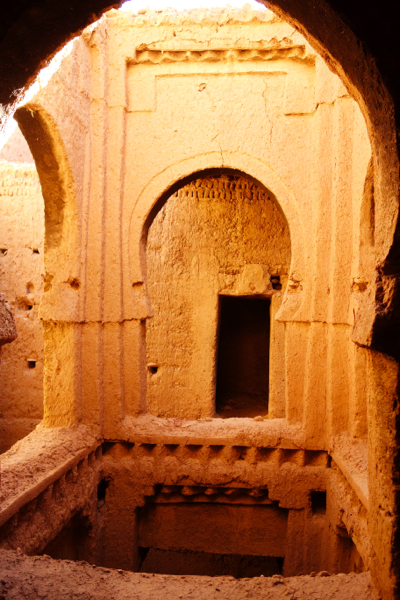
The second floor of one of the houses in the ksar
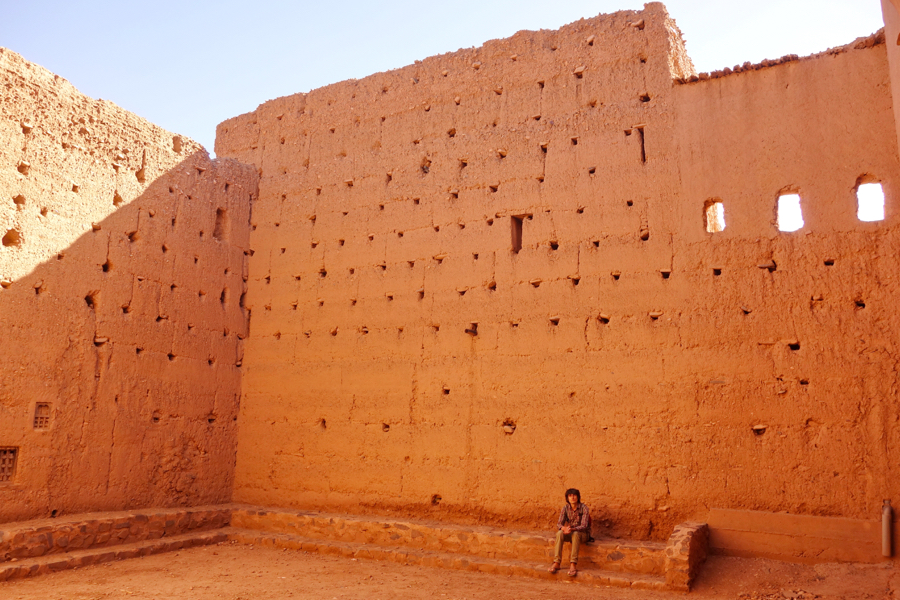
By the wall of the ksar
We keep going, and the landscape is once again breathtaking. Here, among the stone desert, mountains of such strange shapes rise above the ground. It seems as if someone poured them from the sky.
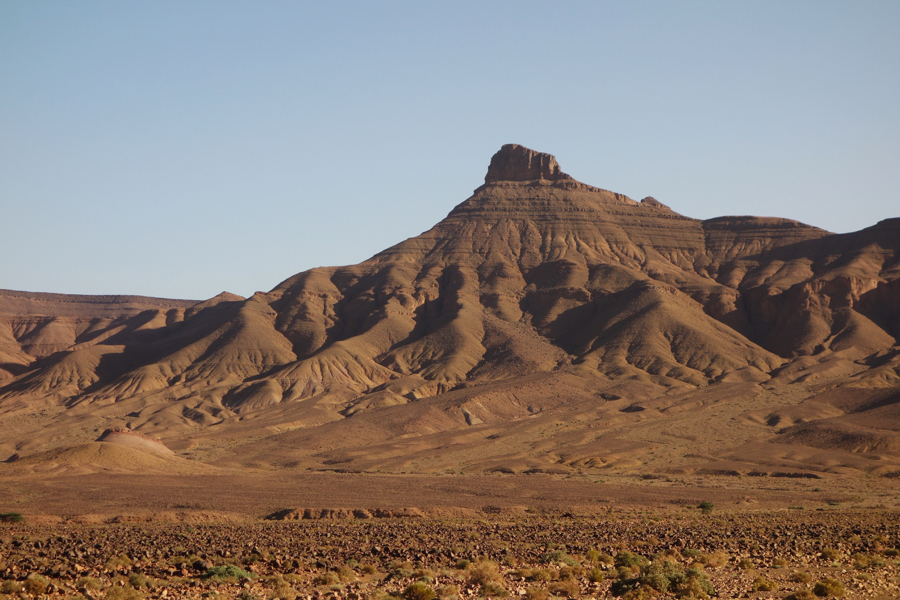
Mountain
We arrive in Nkob in the evening. We find our hotel without any trouble. This time we are staying practically in a house together with the local residents. Their house occupies a large area — half of it is set aside for tourists. There is an inner courtyard in the center with a palm tree. The house is built from the same adobe, a real mud house. The room is very simple. There are a lot of flies, they really bother us.
We go for a walk around Nkob. This village is quite small, but they say you can count 45 kasbahs here.
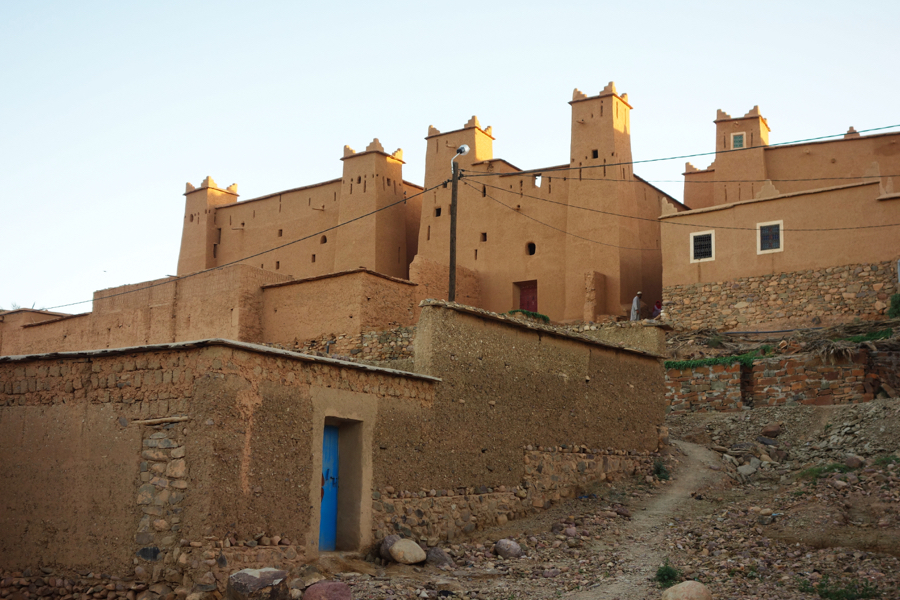
Kasbahs with Turrets in Nkob